Begin with what you want the ground to become
A method comparison is most useful when you have a purpose in mind. You might want an opening through brush, a visible fence line or a lot opened before deciding what ground work comes next. Those goals do not all require the same finish. Describe the intended use in ordinary words, then ask how each method changes the growth and the ground. A clear surface from a distance is not enough information to understand what is left underfoot or what still needs to be considered on the property.
Forestry mulching processes the growth where it stands
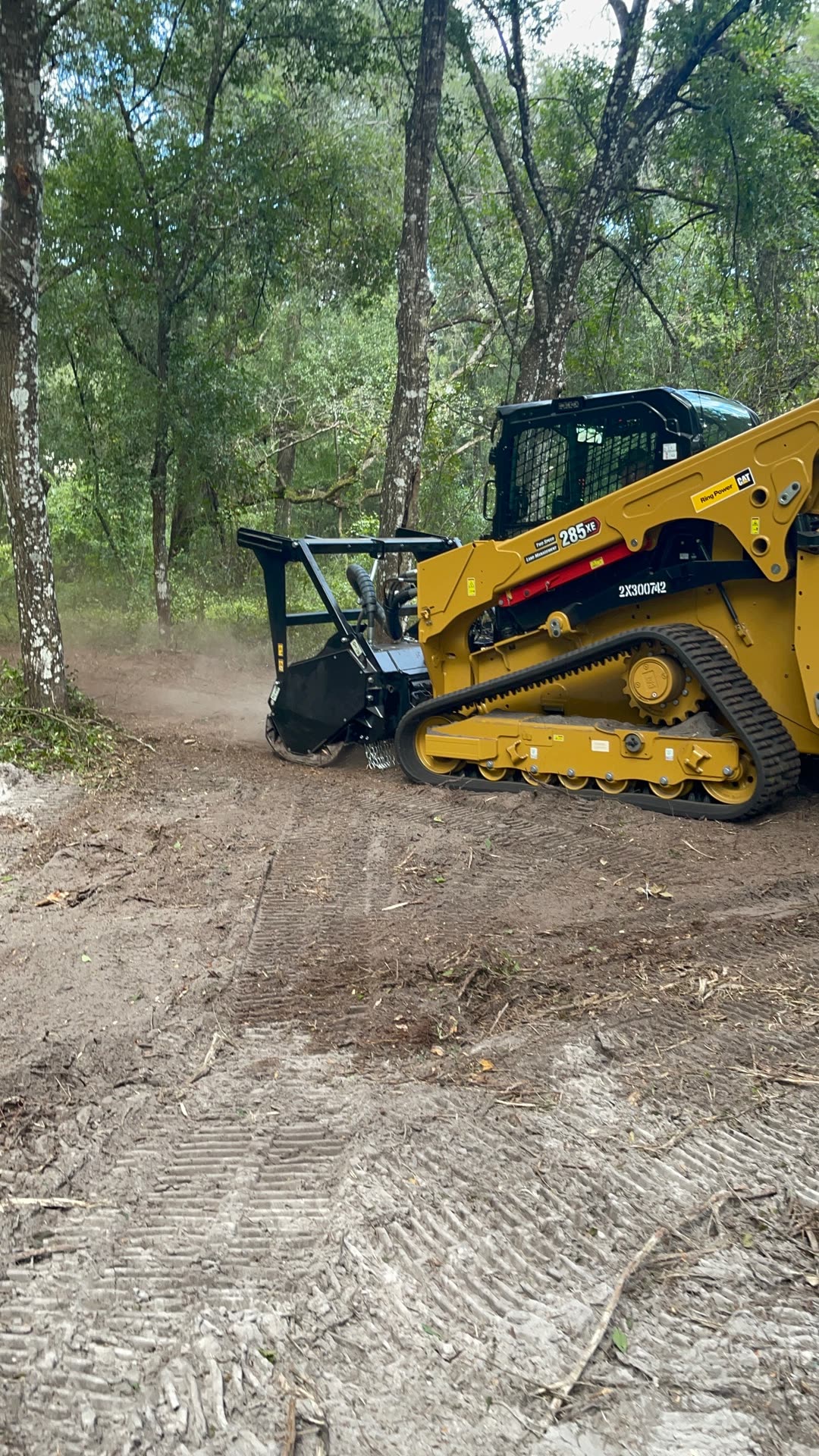
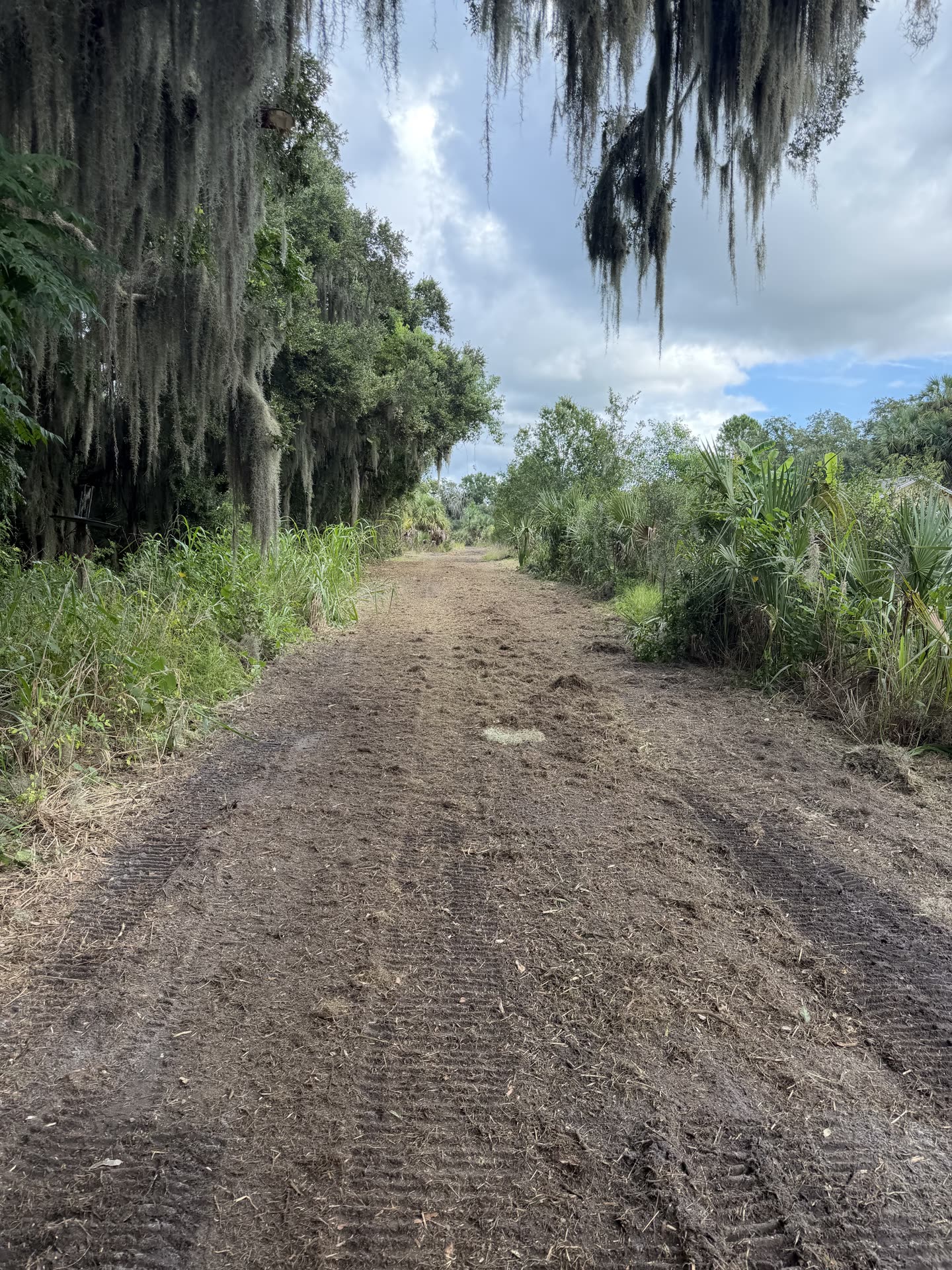
Mulching grinds standing brush, palmetto, scrub and small trees and leaves the resulting material as a layer on the ground. The natural ground shape stays in place. This means the visible growth changes, but uneven places and living roots can remain. The appearance and texture of the layer depend on the growth and the requested finish. If you picture bare ground, that expectation needs to be discussed rather than assumed. A mulch layer is a particular outcome, not another word for every possible cleared surface.
Pushing and piling gathers the material together
Pushing and piling moves growth into concentrated piles rather than processing it into a layer where it stands. That changes both the appearance of the cleared area and where material remains on the property. Ground may be disturbed where the material is pushed or roots are moved. The presence of piles remains a separate consideration in describing the final result. When comparing methods, ask what the words finished area actually include. An open view between piles and a surface covered with mulch are different conditions, even if both began with similar brush.
Roots and stumps need a careful description
Do not infer the condition below the surface from the fact that standing growth is no longer visible. With mulching, roots and stumps can remain. With pushing and piling, the result depends on what is moved and how the work is described; it should not be assumed that every root is gone. This distinction matters when you are thinking about walking the land or deciding what ground work comes next. Ask for a plain explanation of the condition left behind rather than using the disappearance of visible brush as the only measure.
The natural ground shape is a separate issue
Forestry mulching leaves the natural shape of the ground as it is. Pushing material may disturb that surface. Neither description alone should be read as a full explanation of a finished grade for a gravel driveway, house pad or new construction site prep. If the intended result depends on shaping or leveling the earth, make that goal explicit. A method for handling growth and a task that changes the shape of the ground are connected parts of planning, but they are not automatically the same thing.
What remains affects the way you use the area
A mulch layer remains spread over the ground. Piles concentrate material in particular locations. Think about how either result relates to the openings you want, the features you want kept and the route across the property. Avoid assuming that the same amount of visible clearing gives the same practical use. You may also need to account for uneven spots or obscured features after growth is opened. Describing what you plan to do on the land gives the comparison a purpose beyond which method makes the brush less visible.
Compare scope before comparing cost
A price comparison without matching scope can be misleading. Check that the same work area, retained features and intended finish are being discussed. Growth density, terrain, access and conditions also matter. Heavy woody growth and a different requested finish can change the amount of work involved. The Pricing & Cost page explains these drivers without attaching a generic price to an unknown property. A useful estimate provides the number for a defined result rather than asking you to treat two unlike descriptions as though they were identical.
Bring the comparison back to your property
The table below is a guide to the kinds of differences to discuss, not a set of instructions for carrying out any method. Identify your town, work area, access and desired finish. Point out what should stay and any known hidden or soft areas. Some growth can return after mulching, so think about use and upkeep as well as the first opening. With those details in view, the estimate conversation can focus on what fits the land rather than choosing a method simply because its name sounds familiar.
Compare What’s Left Behind
An educational comparison of methods. Your work area and intended finish still need their own description.
| Method | Stumps & roots | Ground surface | What remains | Look of the land |
|---|---|---|---|---|
| Forestry mulching | Roots and stumps can remain. | Natural ground shape stays. | A layer of ground material. | Open ground with a visible mulch layer. |
| Pushing and piling | Depends on what is moved; do not assume roots are gone. | May be disturbed where material is pushed. | Material gathered into piles. | Open areas and concentrated piles. |
| Burning | Roots and stumps may remain. | Does not itself define a finished grade. | Ash and possibly partly burned material. | Appearance depends on remaining material. |
| Shredding with a bush hog | Roots and stumps remain. | Existing ground shape remains. | Cut growth left on the ground. | Cut vegetation rather than a woody mulch finish. |
Burning requires separate consideration of applicable permissions, conditions and controls. This table is not burn guidance.