Separate the question of material from the question of use
It is easy to begin with the brush and ask how to make it disappear. A more useful starting point is the ground you want to use afterward. Describe the opening, the trees or features that should stay and the surface you expect to walk or work on. Then consider how a method changes material on that ground. A different appearance does not automatically produce the result you need. Understanding what remains, including uneven ground and living roots, matters as much as what is no longer standing.
Mulching leaves ground material in place
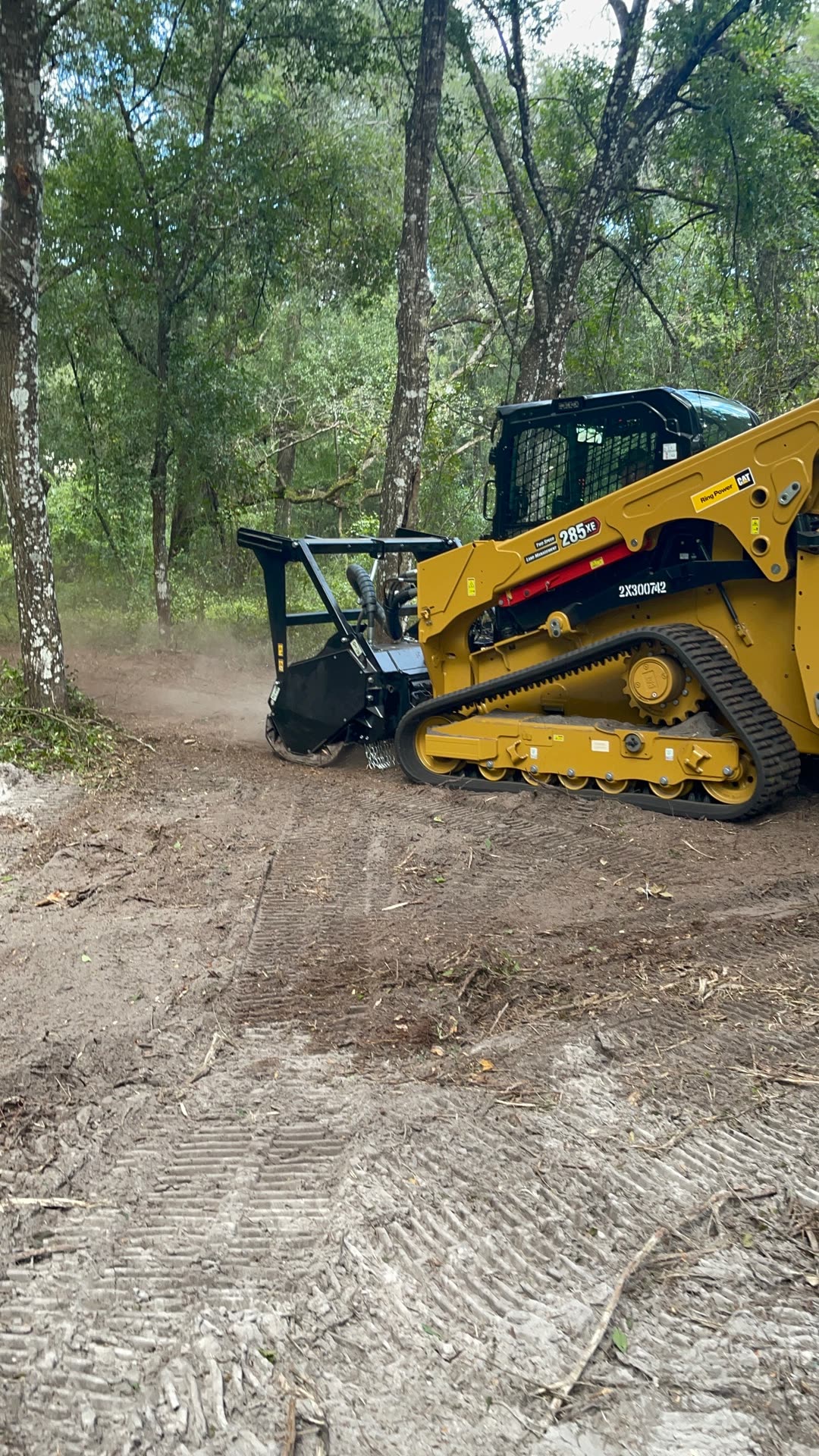
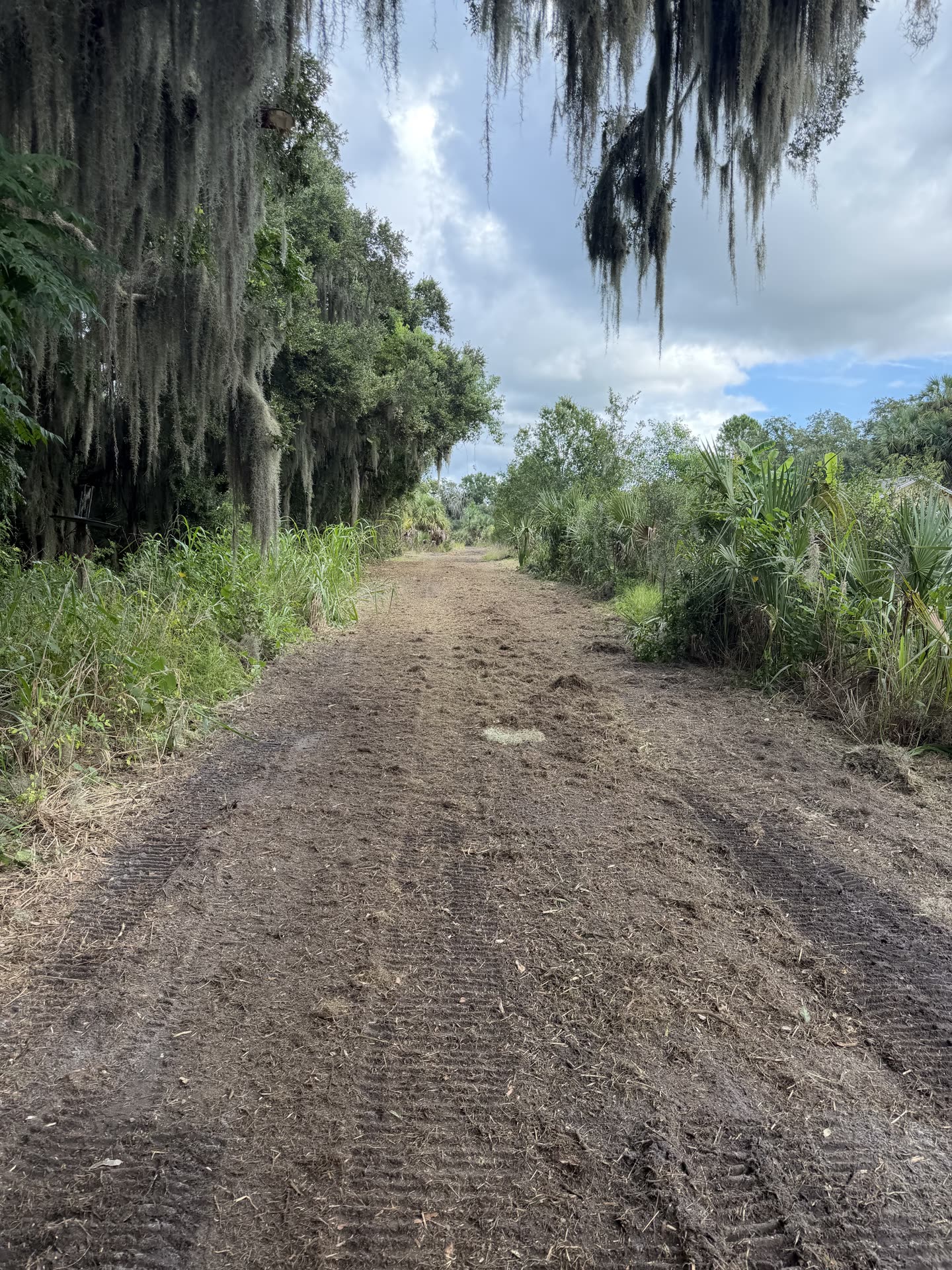
Forestry mulching grinds standing brush, palmetto, scrub and small trees where they grow. The material becomes a layer left on the ground rather than being gathered into a separate location. The natural shape of the land remains. A mulch finish can still contain uneven spots underneath, and some growth can return from roots or seed. It is important to picture that actual result. Mulching is not a description of bare earth, a level surface or a property that will no longer need attention after the growth has been opened.
Burning changes material rather than shaping earth
Burning turns some material into ash and may leave partly burned woody material behind. That description should not be read as a statement that every root or stump is gone. The existing ground shape is also a separate issue. If the goal involves shaping and leveling earth, dealing with brush alone does not describe the whole result. A method comparison needs to keep these subjects distinct: what happens to the vegetation, what remains on the surface and what happens to the earth below it.
Do not treat an educational comparison as permission
Whether burning can be considered requires separate attention to applicable permissions, conditions and controls. This article does not determine those matters for your land and does not provide burn instructions. Do not infer suitability from a general discussion or from what you have seen elsewhere. The purpose here is narrower: to help a property owner understand why burning and mulching are not identical finishes. The name of a method cannot settle questions specific to a particular place, condition or work area. Those questions need their own attention.
The remaining surface can look very different
Mulched ground has a visible layer of processed growth. A burned area may contain ash and remaining woody material. Neither appearance alone establishes whether the ground is safe or even underfoot. Think about how you want to use the opening and what would make that use practical. Do you need to see a boundary, move through an area or understand a lot before deciding on ground work? The intended use is a better guide than assuming that a more bare-looking surface necessarily means a more complete result.
Roots and future growth still belong in the discussion
Removing visible growth from view does not necessarily prevent vegetation from returning. With mulching, living roots can remain, and seeds can take hold. A general comparison with burning should not turn into a claim that another method permanently settles regrowth. Plan for the property as living ground rather than treating the first changed surface as the end of all future decisions. The regrowth article explains why upkeep belongs in the planning conversation. That conversation should be honest without assigning an unsupported schedule to what the ground might do later.
Compare the complete description of the project
A useful scope identifies the work area, retained features and intended finish. It also takes account of access, terrain, density and woodiness of growth, and known ground conditions. Different descriptions can produce different estimates even on the same parcel. Before comparing numbers, check whether the actual results being discussed match. The Pricing & Cost page explains what goes into the estimate. The free estimate produces the number for your project; a general article about methods cannot produce a sound figure for ground that has not been described.
Choose a starting conversation, not an assumed answer
If the land has become difficult to use, begin by describing what you want back. Include the town, approximate work area, what is growing, access and what should remain. The educational method table below helps you ask better questions about the finish. Read it alongside the mulching guide and the preparation checklist so the estimate conversation can stay focused on your property and the ground you actually want to use.
Compare What’s Left Behind
An educational comparison of methods. Your work area and intended finish still need their own description.
| Method | Stumps & roots | Ground surface | What remains | Look of the land |
|---|---|---|---|---|
| Forestry mulching | Roots and stumps can remain. | Natural ground shape stays. | A layer of ground material. | Open ground with a visible mulch layer. |
| Pushing and piling | Depends on what is moved; do not assume roots are gone. | May be disturbed where material is pushed. | Material gathered into piles. | Open areas and concentrated piles. |
| Burning | Roots and stumps may remain. | Does not itself define a finished grade. | Ash and possibly partly burned material. | Appearance depends on remaining material. |
| Shredding with a bush hog | Roots and stumps remain. | Existing ground shape remains. | Cut growth left on the ground. | Cut vegetation rather than a woody mulch finish. |
Burning requires separate consideration of applicable permissions, conditions and controls. This table is not burn guidance.